
What to Do in a Dental Emergency?
Immediate Steps to Take During a Dental Emergency
Dental emergencies can happen anywhere, at any time. They can be scary, unpredictable, and painful. Knowing what to do can ease the panic and potentially save a tooth. The first thing you should do in a dental emergency is call your dentist for further instruction. Your trusted emergency dentist in Winchester, Dr. Talon Haynie, is here to guide you through these moments of discomfort and uncertainty.
Dental emergencies just happen, and there’s nothing you can do to stop them. They can be a real source of stress and pain. But knowing what to do can make a big difference in how you feel and whether you might even save a tooth. So the first thing is to reach out to your dentist – and fast. Dr. Talon Haynie and his team at the Winchester emergency dental clinic are here to guide you through all this.
Common Dental Emergencies and What to Do
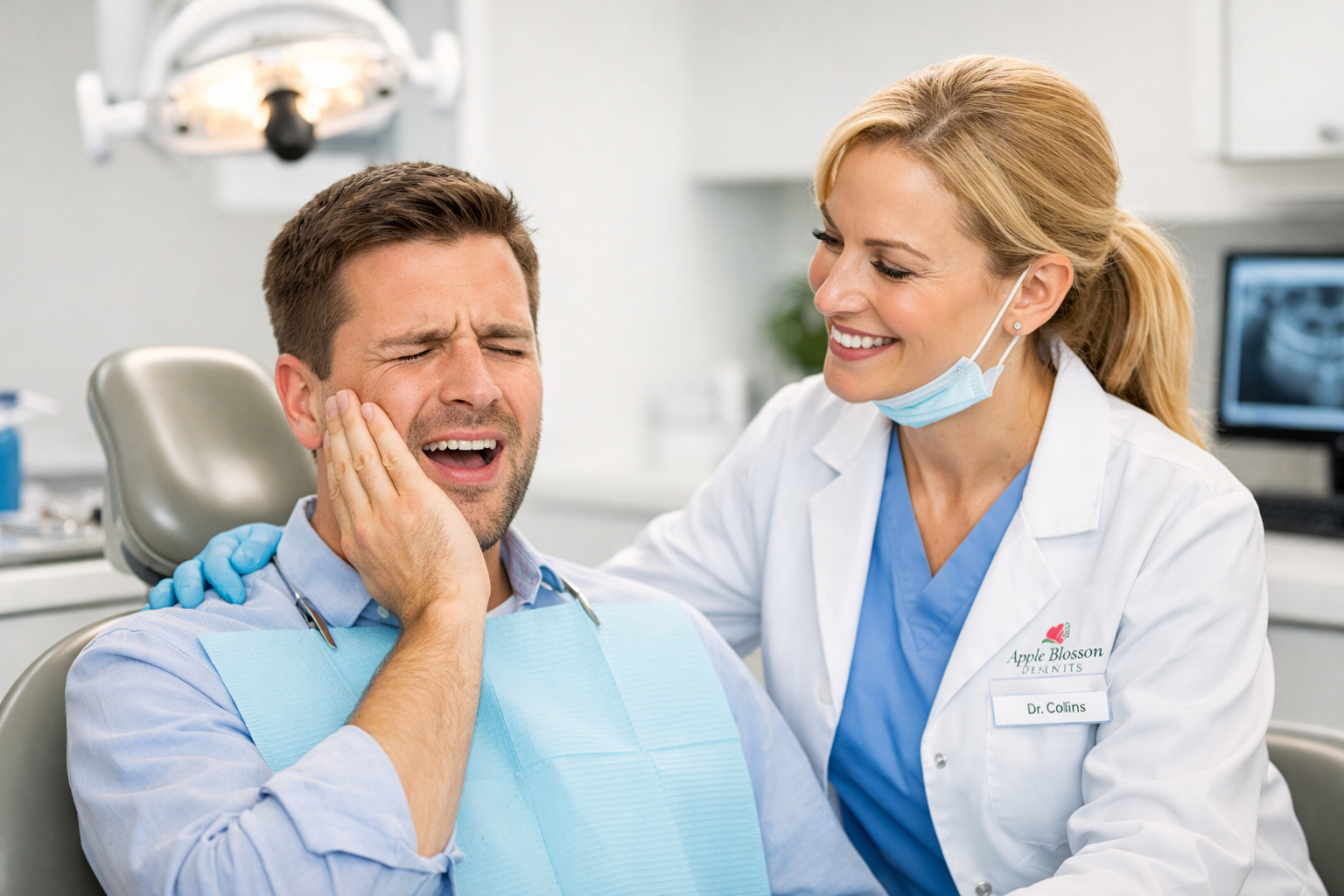
A Really Bad Toothache:
What to do for a Really Bad Toothache
Severe toothaches or a tooth abscess require rinsing with warm salt water and seeing a dentist for treatment. Dental decay and gum disease are common causes of dental pain and emergencies. These conditions require prompt treatment to prevent the spread of infection and potential tooth loss. A persistent, painful toothache that doesn’t subside with over-the-counter pain medication could indicate a deep cavity, infection, or abscess. Severe toothaches or a tooth abscess require rinsing with warm salt water and seeing a dentist for treatment. Dental decay and gum disease are common causes of dental pain and emergencies. These conditions require prompt treatment to prevent the spread of infection and potential tooth loss.
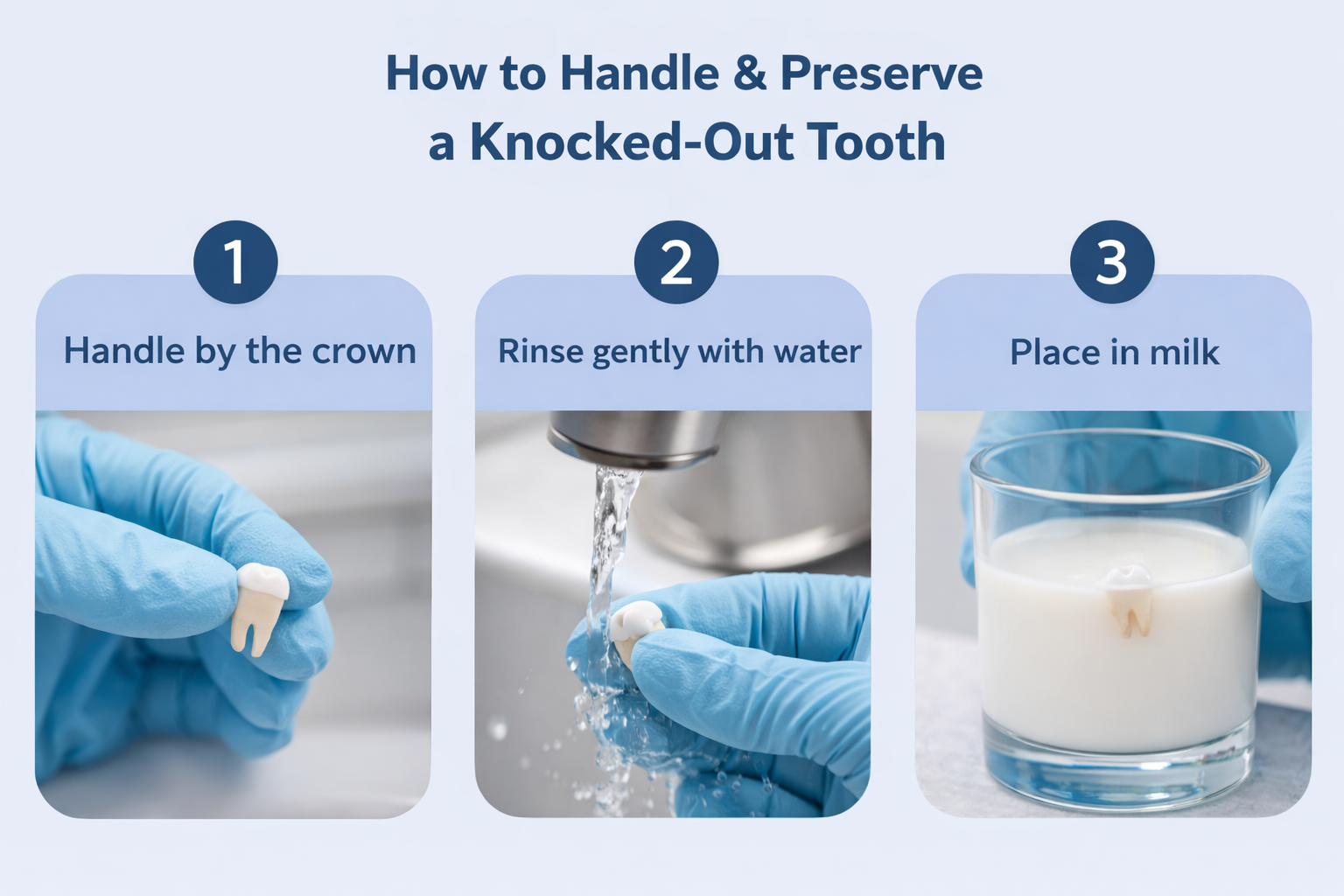
When You Knock-Out a Tooth:
Chipped, Cracked or Fractured Tooth:

Lost Filling or Crown:
Losing a filling or dental crown can expose the sensitive inner part of your tooth, leading to pain and an increased risk of infection and further dental issues. If you can’t see your dentist immediately, you can use dental cement (available at most drugstores) as a temporary solution to cover the exposed area until your appointment.
Abscess:
A tooth abscess is a serious infection that can occur at the root of a tooth or in the gums. It’s often accompanied by severe pain, swelling, fever, and sometimes difficulty swallowing or breathing. Abscesses require immediate dental care to prevent the infection from spreading, often including antibiotics and root canal therapy.
Soft Tissue Injuries:
General Guidelines During a Dental Emergency
In a dental emergency, it’s essential to stay calm and act promptly. A dental emergency requires immediate attention and timely treatment to prevent complications. The specific actions you should take depend on the type of emergency and the dental issues involved, and appropriate treatment will vary.
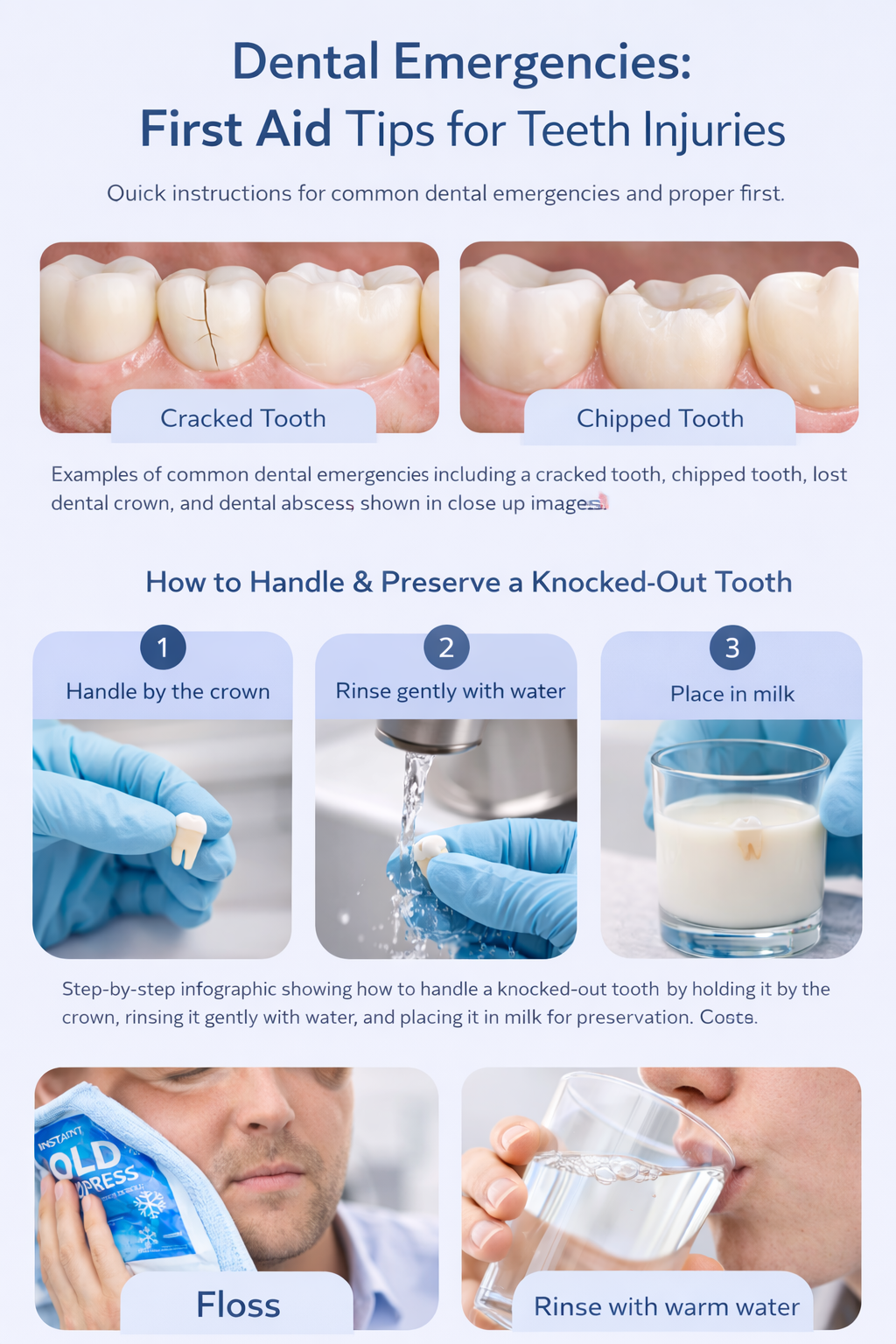
For a knocked-out tooth, as mentioned earlier, try to place it back in its socket or keep it moist in milk or saliva. Avoid touching the root of the tooth, as this can damage the tissues that are necessary for successful re-implantation.
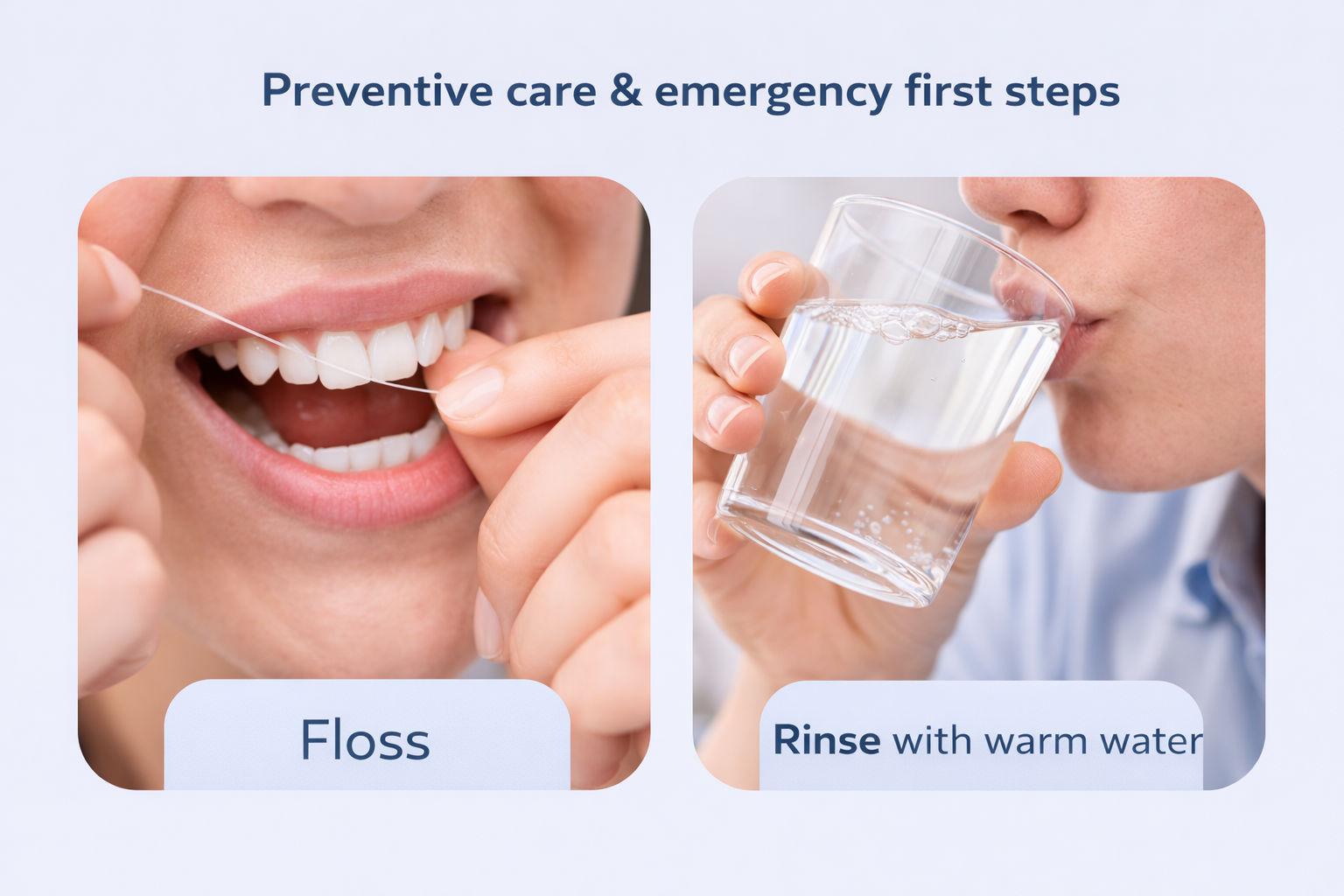
If you’re experiencing severe pain, rinse your mouth with warm water to clean it out. You can also use dental floss to remove any food particles that may be stuck between your teeth and causing the pain. Over-the-counter pain medication like ibuprofen can help manage the pain until you can see your dentist.
For a cracked, chipped, or fractured tooth, rinse your mouth with warm water to clean the area. If there’s swelling, apply a cold compress to the outside of the cheek.
If you’ve lost a filling or dental crown, you can use store-bought dental cement or even sugar-free gum as a temporary measure to cover the exposed area until your dental appointment.
If you’ve lost a filling or dental crown, you can use some dental cement or even a bit of sugar-free gum to sort of patch up the exposed bit until you can get to the dentist.For an abscess, just rinse your mouth a few times a day with warm salt water to help draw the yucky stuff to the surface and ease the ache. You can also take some over-the-counter pain meds to manage the discomfort.
When to See a Dentist vs. Go to the Emergency Room
For most common dental emergencies, such as a broken or knocked-out tooth, treatment is typically provided in a dental office. If you don’t have a dentist, go to an urgent care center or your nearest emergency room. If your dentist’s office isn’t open when tooth pain develops, you should go to your nearest emergency room.
Emergency rooms can provide pain relief and antibiotics, but they do not perform dental procedures such as fillings or crowns. For serious injuries like broken facial bones, you should go directly to the emergency room. Signs of a serious dental emergency include difficulty breathing or swallowing, severe facial swelling, and uncontrolled bleeding. Severe symptoms like uncontrolled bleeding or difficulty breathing require a visit to the ER, not just the dentist.

Preventing Dental Emergencies
Tips to Help Prevent Dental Emergencies:
- Wear a mouthguard during sports activities to protect your teeth from traumatic injuries. This is especially important for contact sports like football, hockey, and boxing, but even non-contact sports like basketball and skateboarding can lead to dental injuries.
- Avoid chewing on hard items such as ice, popcorn kernels, or pen caps, as they can crack or chip your teeth.
- Don’t use your teeth as tools to open packages or bottles. This can put unnecessary stress on your teeth and lead to cracks or fractures.
- Address teeth grinding or clenching (bruxism) with your dentist. Over time, this habit can wear down your teeth and make them more susceptible to damage. Your dentist may recommend a night guard to protect your teeth while you sleep.
- Maintain a balanced diet and limit sugary or acidic foods and drinks, which can contribute to tooth decay and weaken your tooth enamel over time.
- If you have children, childproof your home to prevent falls and accidents that could lead to dental trauma. This includes using gates at the top and bottom of stairs, padding sharp furniture corners, and keeping an eye on young children during playtime.
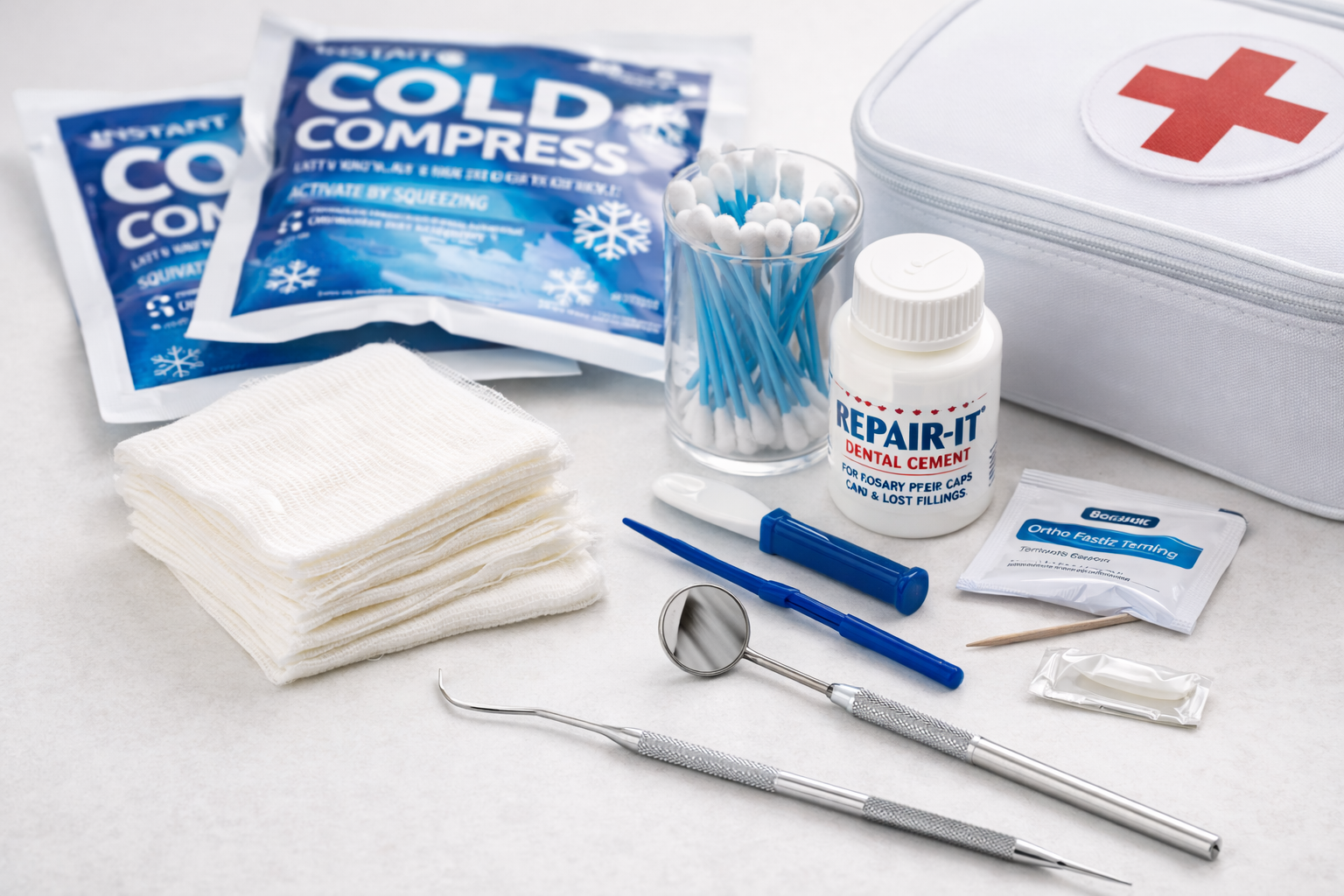
- Build a dental emergency kit with essential items.
How Your Winchester Emergency Dentist Can Help
Your Winchester emergency dentist, Dr. Talon Haynie, plays a crucial role during a dental emergency. He provides immediate treatment to alleviate pain, save your teeth, and prevent further damage. Further treatment may be required after initial emergency care.
Emergency Dental Treatments You May Receive
- Throwing some antibiotics at an infection to keep it from spreading – especially if you’ve got an abscess or some other nasty periodontal disease going on.
- Doing a root canal to get rid of the bad stuff in the middle of the tooth and save it from being yanked.
- Stabilizing a loose tooth so it can heal.
- Repairing chipped or cracked teeth with a filling, bonding, veneers or crowns, depending on how bad it is.
- Replacing a lost filling or crown to protect the tooth and keep it from rotting.
- Popping out teeth that are really beyond the point of being saved.
Understanding Dental Pain
Signs You Need Emergency Dental Care
When You Need Emergency Dental Care
Some of the reasons why choosing Apple Blossom Dentistry for emergency dental care is a good idea are:
- If you’ve got a dental emergency, they can get you in the same day
- They’re open a bit later in the day to fit in with those long work hours
- They’re at the cutting edge in terms of technology to make sure a diagnosis and treatment are accurate
- The team at Apple Blossom Dentistry are total professionals – they care about you and your teeth
- They offer a comprehensive range of services to sort out any problems you might have
- Their dental practice is right in the heart of Winchester, VA – handy!
Schedule Emergency Dental Care in Winchester, VA
The key thing to remember here is that the quicker you get to a dentist, the better – you can end up saving your tooth and avoiding a right disaster later on down the line. Trust your smile to your dentist in Winchester, Apple Blossom Dentistry.
Pick up the phone and give them a ring now on (540) 667-3267 to get booked in.
We are always here to help you and we reckon your smile is just about the most important thing in the world – so contact us whenever you need us and we’ll sort you out.
You won’t have to let a dental emergency ruin your day – get in touch and let us get you back to smiling in no time.