
Root Canal Winchester VA:
Gentle & Effective Treatment
Root Canal Therapy in Winchester, VA
Are you experiencing severe tooth pain, sensitivity to hot or cold, or discomfort when biting or chewing? These symptoms could be a sign that you require root canal therapy. Swelling in the face near the affected tooth and the presence of an abscess are also significant indicators of an infected tooth. This treatment, offered by your Winchester dentist at Apple Blossom Dentistry, is a common dental procedure designed to save your natural teeth and prevent the need for dental implants or bridges. During your visit, the dentist will also examine your gums for signs of infection or disease.
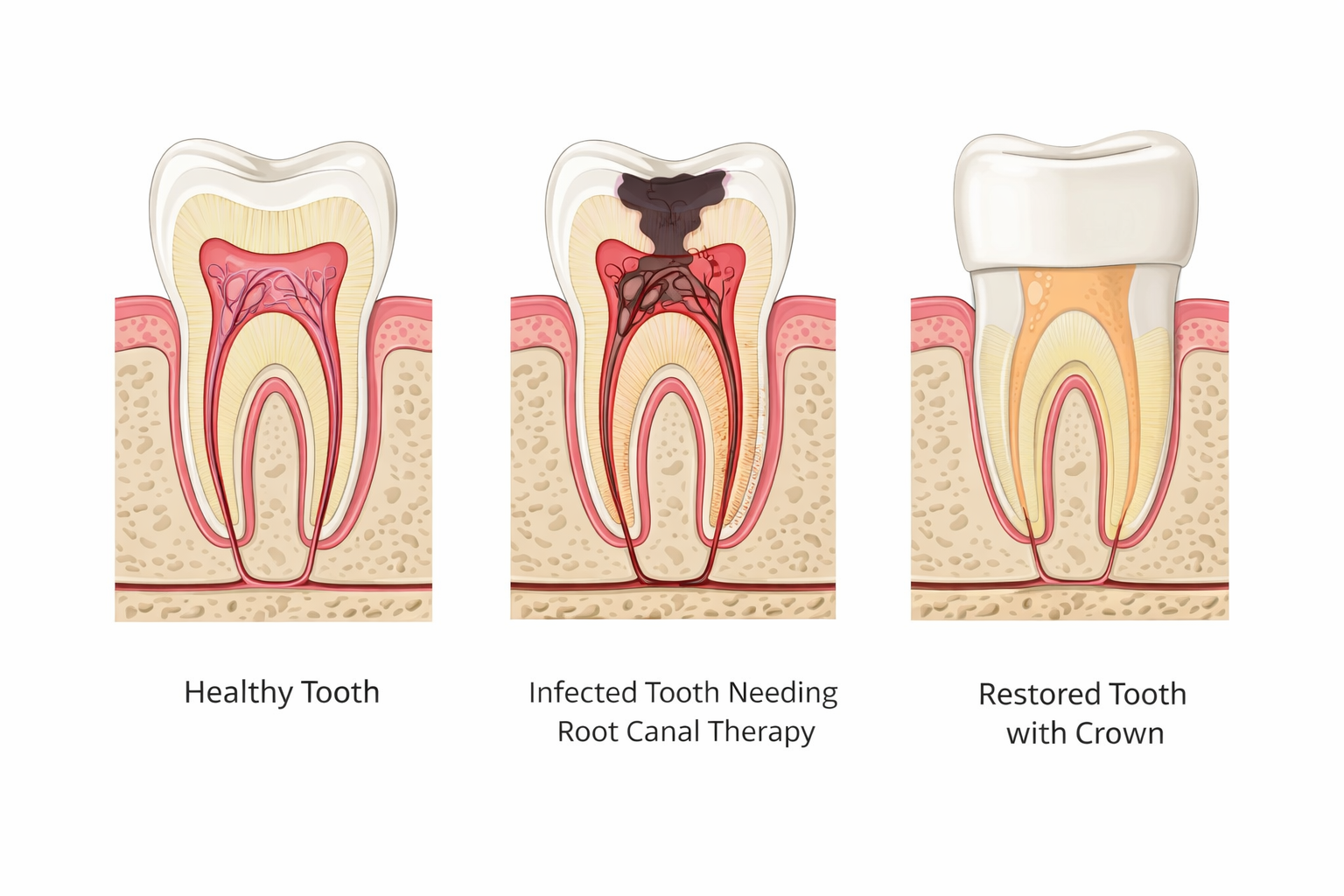
Root canal therapy involves the removal of the infected or inflamed pulp within your tooth. The pulp contains nerves and blood vessels, and infection of these can cause severe pain and require treatment. The inside of the tooth is then cleaned and disinfected, followed by filling and sealing. The procedure is performed under local anesthetic, ensuring your comfort throughout the process. Root canal therapy is a routine procedure that can prevent the need for tooth extraction, which often requires more complex follow-up care. Severe infection can lead to complications if not treated promptly.
- Book online your checkup
- Visit our practice
- Call (540) 667-3267
Why Should I Get Root Canal Therapy?
Root canal therapy is an essential treatment for preserving your natural teeth and maintaining your oral health. When the pulp of your tooth becomes infected or inflamed due to deep decay, repeated dental procedures, faulty crowns, or a crack or chip in the tooth, it can cause pain and lead to further complications if left untreated. Untreated tooth infection can result in loss of bone mass in the jaw, and severe infections may cause swelling or damage to the jawbone. Root canal therapy involves cleaning and disinfecting the canals inside the tooth to eliminate infection and save the tooth. Many dental professionals, emphasize that root canal therapy is often preferable to tooth extraction. With today’s advanced technology and techniques, root canal therapy is a straightforward procedure that’s as comfortable as getting a filling.
Did you know…
-
 Root canal therapy actually saves millions of teeth each year!
Ready to schedule your appointment?
The Benefits Of Root Canal Therapy
Pain Relief
One of the immediate benefits of root canal therapy is pain relief. The procedure effectively eliminates the pain caused by infection or inflammation of the nerves within the tooth pulp. After the treatment, patients usually experience a significant reduction in discomfort and can return to their normal activities without any hindrance.
Prevents Spread of Infection
Root canal therapy not only treats the affected tooth but also prevents the spread of infection to other teeth. By removing the infected pulp, the treatment stops the progression of the infection, safeguarding your overall oral health. Prompt root canal therapy can prevent the development of severe infection and its associated complications, making early intervention essential.
Preserves Natural Teeth
The ultimate goal of root canal therapy is to save your natural tooth. Preserving your natural teeth helps maintain your natural smile, allows for normal biting force and sensation, and protects other teeth from excessive wear or strain.
The Root Canal Therapy Treatment Process
X-Ray and Anesthesia
The first step in the root canal procedure is taking an X-ray to determine the extent of the infection. Once this is done, local anesthesia is administered to numb the area and ensure you are comfortable throughout the procedure. After you are numb, a small hole is drilled at the top of the affected tooth to access the pulp and nerves inside.

Pulp Removal and Cleaning
The next step involves making an opening in the crown of the tooth. Through this opening, the infected or inflamed pulp is removed, and the dentist carefully cleans and disinfects the canals inside the tooth to remove bacteria and debris.

Filling and Sealing
Once the tooth is thoroughly cleaned, it is filled with a rubber-like material called gutta-percha. After the filling, the tooth is sealed with a temporary or permanent filling. The final step, usually performed in a separate appointment, involves placing a crown or other restoration on the tooth to protect it and restore it to full function.
Aftercare and Follow-Up
After your root canal treatment at Apple Blossom Dentistry, proper aftercare is essential to ensure your treated tooth heals well and to protect your overall oral health. Root canal therapy involves removing infected or inflamed pulp, and following your dentist’s instructions after the procedure can help prevent reinfection and support a smooth recovery.
Immediately after your root canal procedure, you may experience some mild discomfort or sensitivity as the area heals. Your dentist may recommend over-the-counter or prescription pain medication to manage any severe tooth pain. It’s important to take all medications as directed and avoid chewing or biting on the affected tooth until your final restoration—such as a dental crown—is placed. This helps protect the tooth and allows the soft tissue around it to recover.
Maintaining quality dental care at home is crucial. Brush and floss gently around the treated area, and continue your regular oral hygiene routine to prevent further tooth decay or gum disease. Avoiding hard or sticky foods can also help prevent damage to the temporary filling or the treated tooth before the final restoration is completed.
Follow-up appointments are a key part of the root canal therapy process. Your dentist will schedule visits to monitor your healing, check for any signs of infection, and ensure the tooth is regaining full function. X-rays may be taken to verify that the infection has cleared and to check for any bone loss or other complications. In most cases, root canal therapy is highly successful, and the treated tooth can last for many years with proper care.
If you notice any severe pain, swelling, or sensitivity after your root canal treatment, contact your dentist promptly. While complications are rare, early intervention can prevent more serious issues and may avoid the need for tooth extraction or additional dental services. In some cases where the tooth is too damaged or the infection is too severe, dental implants or other restoration options may be discussed to restore your beautiful smile and maintain your oral health.